Growth in wind energy balanced higher gas prices and low water reserves in September
At the end of September, the electricity market was increasingly characterised by the transition from the summer period to the heating season. As the days grow shorter, solar power generation has declined, air temperatures have fallen and dispatchable power plants have begun to play a greater role. At the same time, market prices are also being shaped by high natural gas prices and unusually low water levels in the Nordic reservoirs.
Although electricity prices did not yet rise to a persistently high level, the impact of weather on the market was already clearly visible. The average electricity price in Estonia stood at 75 EUR/MWh in September, which was 27% higher than in August. In Latvia and Lithuania, the average price was approximately 108 EUR/MWh. The price difference stemmed primarily from the fact that Estonia continued to have better access to more favourably priced Nordic electricity.
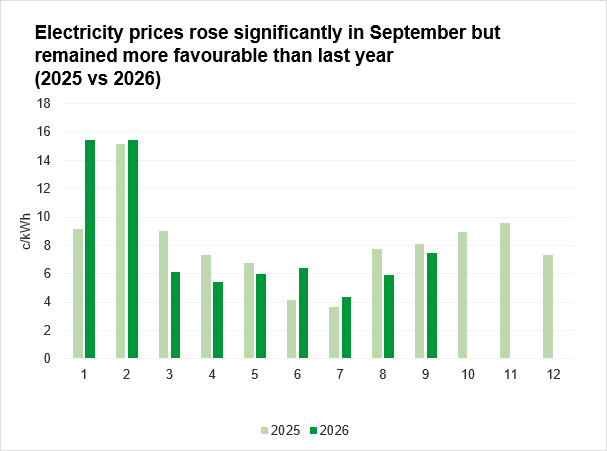
Increased wind generation brought periods of favourable prices to the market
Across the Baltics, September prices were primarily influenced by wind and solar power generation and the availability of imported electricity. Local wind and solar power together covered approximately half of the total electricity consumption of the Baltics. This helped keep the monthly average electricity price at a lower level despite higher gas prices and low water reserves in the Nordic countries.
At the same time, the impact of wind and solar power was not consistent throughout the month. Solar power generation decreased by 39% compared with August and stood at 439 GWh. Wind power generation, meanwhile, increased to 655 GWh, which was 29% more than in August. Strong renewable energy generation pushed prices down sharply and brought hours with favourable prices to the market. When wind was low, more expensive local power plants had to be brought online to meet demand, and prices rose noticeably in a short space of time.
In addition, these price fluctuations were amplified by various maintenance works carried out across the region’s electricity system. Firstly, the market was affected by maintenance on the NordBalt interconnector between Sweden and Lithuania. Secondly, maintenance works at several Finnish nuclear power plants also reduced overall regional electricity generation. This reduced the ability of the market to replace missing renewable energy generation with cheaper imports. Prices rose the most when generation constraints coincided with low wind output.
Growing storage capacity mitigates price fluctuations
The increased energy storage capacity in the Baltic states has begun to significantly mitigate these intraday price fluctuations. Battery storage systems buy electricity when prices are low and sell it back to the market during higher-priced hours. Consequently, storage systems can influence market prices even before they actually begin charging or feeding electricity into the network.
However, current storage capacity is not sufficient to cover a prolonged period of low wind or significant import constraints. Therefore, the impact of energy storage is currently most visible on an intraday basis. To mitigate a multi-day generation deficit, the region still needs to rely on imports, flexible consumption or dispatchable generation.
Weather plays an even greater role in autumn electricity prices
As the heating season progresses, the balance of the market becomes even more sensitive to weather conditions. Solar power generation continues to decline, while colder and darker working days increase demand during morning and evening hours. This means that wind energy becomes the primary factor that helps keep electricity prices low.
During windy periods, increased regional wind generation capacity can keep prices low even when natural gas remains expensive. In calm weather conditions, however, lower solar generation and higher demand must be met by imports or local oil shale and gas-fired power plants. As the generation costs of these power plants are higher, their increased use drives up electricity prices and makes price spikes typical of the winter period more frequent.
Whether these price spikes reach all Baltic price areas depends largely on the availability of imports.
The gas market increases winter price risks
The gas market adds further upside risks to electricity prices. European gas storage levels improved during September, but remained significantly below the usual seasonal levels seen in recent years.
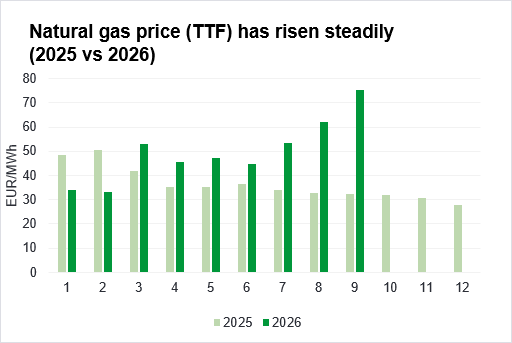
This does not automatically mean higher electricity prices in the Baltics. If renewable energy generation and import opportunities are sufficient, the impact of gas-fired electricity on the market price may remain limited. Risks increase when cold weather drives up gas demand, wind generation in the Baltics is low and low water reserves limit hydropower generation in the Nordic countries.
In such a scenario, gas-fired power plants must be used more frequently and gas price changes are passed through more directly to electricity prices.
Conversely, if autumn turns out to be mild, windy and wet, consumption will fall, renewable and hydro generation will increase and expensive thermal power generation will dictate market prices less frequently.
The September market therefore provided the first indication of the emerging winter price pattern. Although the average electricity price may remain at a moderate level, individual price rises and falls may be more pronounced than before.
Karl Joosep Randveer, Senior Market Analyst at Enefit
The market overview has been compiled by Enefit according to the best current knowledge. The information provided is based on public information. The market overview is presented as informative material and not as a promise, proposal or official forecast by Enefit. Due to rapid changes in the regulation of the electricity market, the market overview or the information contained in it is not final and may not correspond to future situations. Enefit is not liable for any costs or damages that may arise in connection with the use of the information provided.