Energy Market Overview: Strong wind generation kept electricity prices in check in October
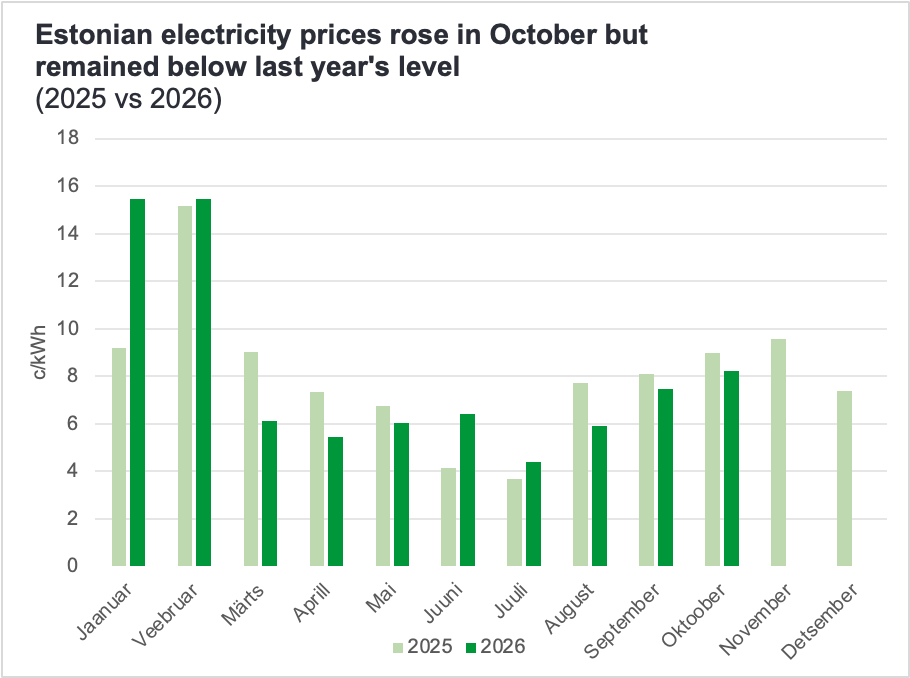
Strong wind generation helped keep Baltic electricity prices in check in October, despite sharply rising natural gas prices and below-normal Nordic hydro reserves. Estonia's average day-ahead electricity price was 8.2 c/kWh, 8% lower than a year earlier but 10% higher than in September.
Estonian electricity prices remained lower than in neighbouring countries
The average electricity price in Estonia reached 8.2 c/kWh in October, compared with 7.5 c/kWh in September. In Latvia and Lithuania, prices averaged 11.3 and 11.4 c/kWh, respectively, increasing by 7% and 8% year-on-year.
Estonia benefited from access to lower-priced Finnish electricity, with Estlink operating at maximum available capacity during 44% of October's hours, compared with 25% in September. Meanwhile, Latvia and Lithuania were more exposed to higher electricity prices in Sweden.
Renewable energy covered 40% of electricity consumption in the Baltics
Wind generation across the Baltics reached approximately 724 GWh in October, 50% more than a year earlier. The increase was supported by favourable wind conditions and new capacity, including Enefit's Kelmė II wind farm in Lithuania, with a capacity of 87 MW.
Solar generation totalled 244 GWh, 50% above October 2025 but 44% below September due to shorter daylight hours.
Together, wind and solar covered 40% of Baltic electricity consumption, up from 28% a year earlier. Compared with a year earlier, higher renewable output reduced net electricity imports from 38% to 31% of consumption, while fossil-fuel generation declined by approximately 58% year-on-year.
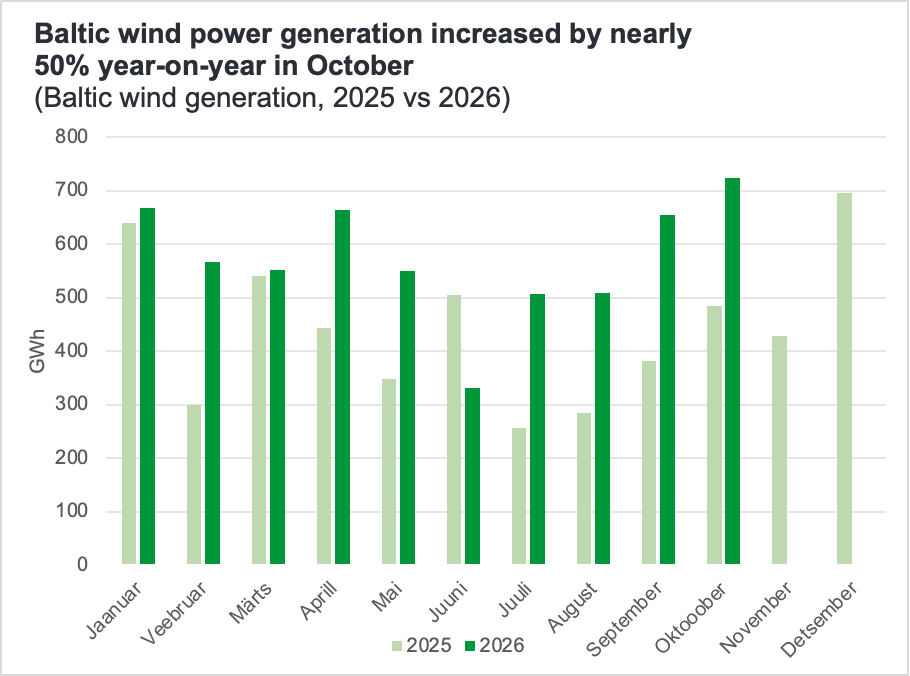
The impact on prices was clear: on days when Baltic wind generation exceeded 30 GWh, Estonia's average electricity price was 4.3 c/kWh. When output fell below 15 GWh, the price rose to 10.6 c/kWh.
Price fluctuations narrowed
The average daily difference between Estonia's highest and lowest hourly electricity prices narrowed to 13.6 c/kWh, compared with 22.0 c/kWh a year earlier. Strong wind generation, electricity imports from Finland and growing battery storage capacity helped moderate hourly price differences.
However, weekly average prices still ranged from 4.6 to 12.1 c/kWh. Towards the end of October, average daily Baltic wind generation fell from 32.1 to 17.6 GWh between consecutive weeks, while Estonia's average electricity price increased from 7.0 to 11.7 c/kWh. The highest daily average price, 20.3 c/kWh, was recorded on 30 October.
Rising gas prices increase winter risks
Natural gas prices rose sharply in October. The European TTF benchmark averaged EUR 86.6/MWh, 15% above September and approximately 2.7 times the level recorded a year earlier. By the end of the month, prices had reached around EUR 100/MWh, their highest level since December 2022.
Despite higher gas prices, strong renewable generation helped limit their impact on electricity prices. However, during periods of low wind output, the market becomes more dependent on gas-fired and other dispatchable generation, increasing exposure to fuel and carbon allowance costs.
Looking ahead, declining solar generation and rising winter electricity demand will increase the importance of wind conditions and electricity imports. Connections with Finland will remain particularly important for Estonia, while the expected return of Swedish nuclear generation in the second half of November should help ease pressure on Latvian and Lithuanian prices.
With Nordic hydro reserves remaining below normal, winter electricity prices will largely depend on weather conditions and import availability. A mild and windy winter could keep prices contained, while prolonged cold and calm periods could lead to significant price increases across the Baltics.