Innovation in Renewable Energy: Enefit Supports Grid Stability with Renewable Energy Assets
Enefit has reached a new level in the management of its renewable energy assets and has provided upregulation services on the manual Frequency Restoration Reserve (mFRR) market using renewable energy assets. This is one of the first examples in Europe where renewable energy assets are used in the flexibility market in a bidirectional manner, for both upregulation and downregulation.
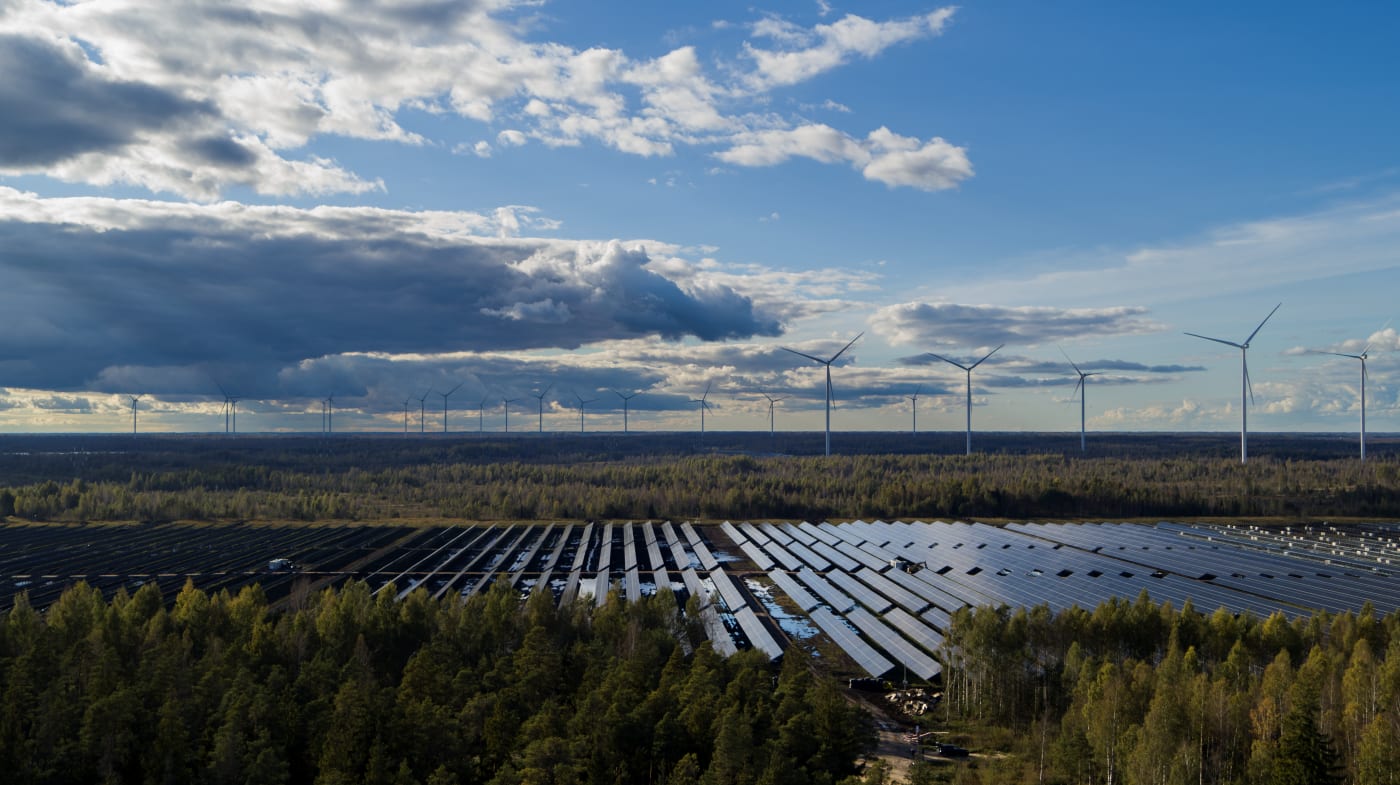
‘Today, we no longer speak of renewable energy as non-dispatchable generation. With smart control, both solar and wind farms can provide the frequency reserve services required by the power system. While it was previously believed that renewable energy was only suitable for downregulation, our experience clearly shows that, at sufficient scale, renewable energy can also be used for upregulation,’ said Tiit Hõbejõgi, Member of the Management Board and Head of Energy Trading and Portfolio Management at Enefit.
In Estonia, Enefit is able to upregulate the Aulepa, Aseriaru, Esivere, Narva, Sopi-Tootsi, Paldiski, Pakri, Virtsu and Viru-Nigula wind farms, as well as the Sopi solar park, which together are qualified to deliver up to 150 MW of upregulation capacity.
In Lithuania, the same is provided by the Kelme I, Ciuteliai, Akmene, Šilute and Šilale II wind farms, which together are qualified to deliver up to 86 MW of upregulation capacity.
This kind of renewable energy flexibility supports power system balancing in two ways: by curtailing generation, wind and solar farms can temporarily reduce the amount of electricity fed into the network at times when supply already exceeds market demand. In the case of upregulation, generation can be curtailed at certain times so that output can be increased when there is insufficient electricity in the system in real time. This helps the system operator maintain a better balance between supply and demand and reduce the costs of procuring frequency reserves.
‘If the balance of the system is maintained to a greater extent using renewable energy assets, ie through more cost-efficient generation, this reduces balancing costs for all market participants, including end consumers,’ explained Hõbejõgi. ‘In addition, improved controllability of renewable energy allows us to transition to a higher share of renewable-based generation. This, in turn, helps to make regional electricity prices more competitive.’
Enefit is the largest provider of manual and automatic frequency restoration reserves in Estonia. The generation units and storage solutions of the company are capable of meeting the requirements of the European frequency control platform for providing manual frequency restoration reserve (mFRR), automatic frequency restoration reserve (aFRR) and frequency containment reserve (FCR).