The first battery-equipped EV charger in the Baltics promises to address infrastructure bottlenecks
The first fast charger with an integrated battery storage system has been opened in Enefit’s public charging network in the Baltics. The solution being tested could in future enable a reliable and fast charging service both during power outages and in areas where the electricity network has not allowed it.
‘Electric transport is developing rapidly, but infrastructure growth can often lag behind because of connection capacities and network investments. A battery-equipped fast charger makes it possible to install new charging points even in areas where network capacity is limited,’ said Robert Kutsar, Head of Charging Infrastructure and Partnerships at Enefit.
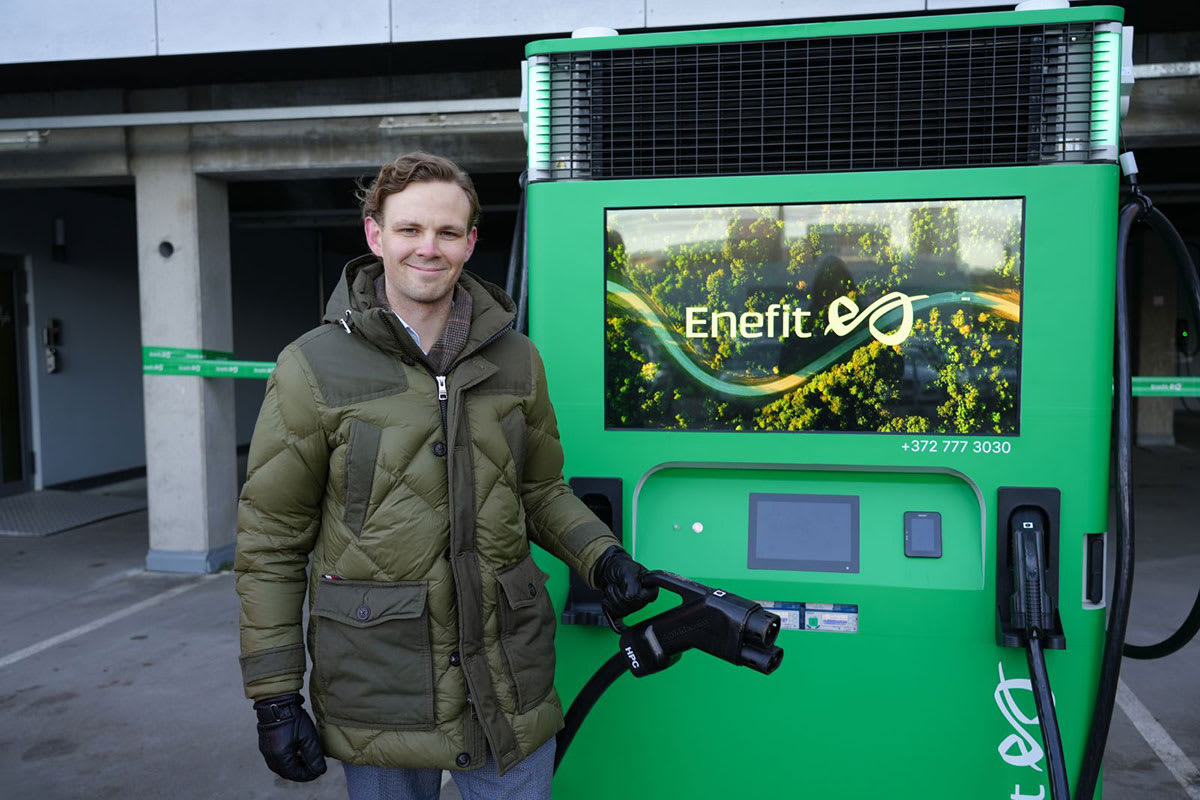
The new solution is a fast charger with a total capacity of 250 kilowatts, centred on a 160-kilowatt-hour battery storage system. The device allows two electric vehicles with CCS connectors to be charged simultaneously, providing up to 150 kilowatts per connector, which enables around 100 kilometres of range to be gained in roughly ten minutes. A distinctive feature of the charger is that full-power charging is achieved with a network connection capacity that is approximately five times smaller (63 amps).
‘A battery-equipped charger also helps reduce peak demand load, increases the flexibility of the electricity network, and gives electric vehicle owners greater confidence when charging. For example, a storage capacity of 160 kilowatt-hours makes it possible to serve roughly eight average charging sessions in the Enefit network during a power outage,’ Kutsar added.
The charger is controlled by software that directs energy from the network straight to the vehicle first, storing any surplus energy in the battery during periods when no charging is taking place. This system makes it possible to schedule battery charging for lower-cost periods, helping to keep rapid-charging prices competitive for customers. For users, the price benefit is reflected in the fact that charging at the battery-equipped unit is more affordable than usual – priced at the level of an up-to-100-kW charger.
A battery-equipped charger has been installed as part of the pilot project adjacent to Eesti Energia’s head office in Tallinn. According to Kutsar, the aim is to assess how well the solution suits local conditions and to decide whether and how to roll it out more widely. If the pilot proves successful, Enefit plans to deploy similar solutions in Estonia and neighbouring countries.